Three decades later, the Mighty Ducks Act is just as important as ever for Minnesota hockey
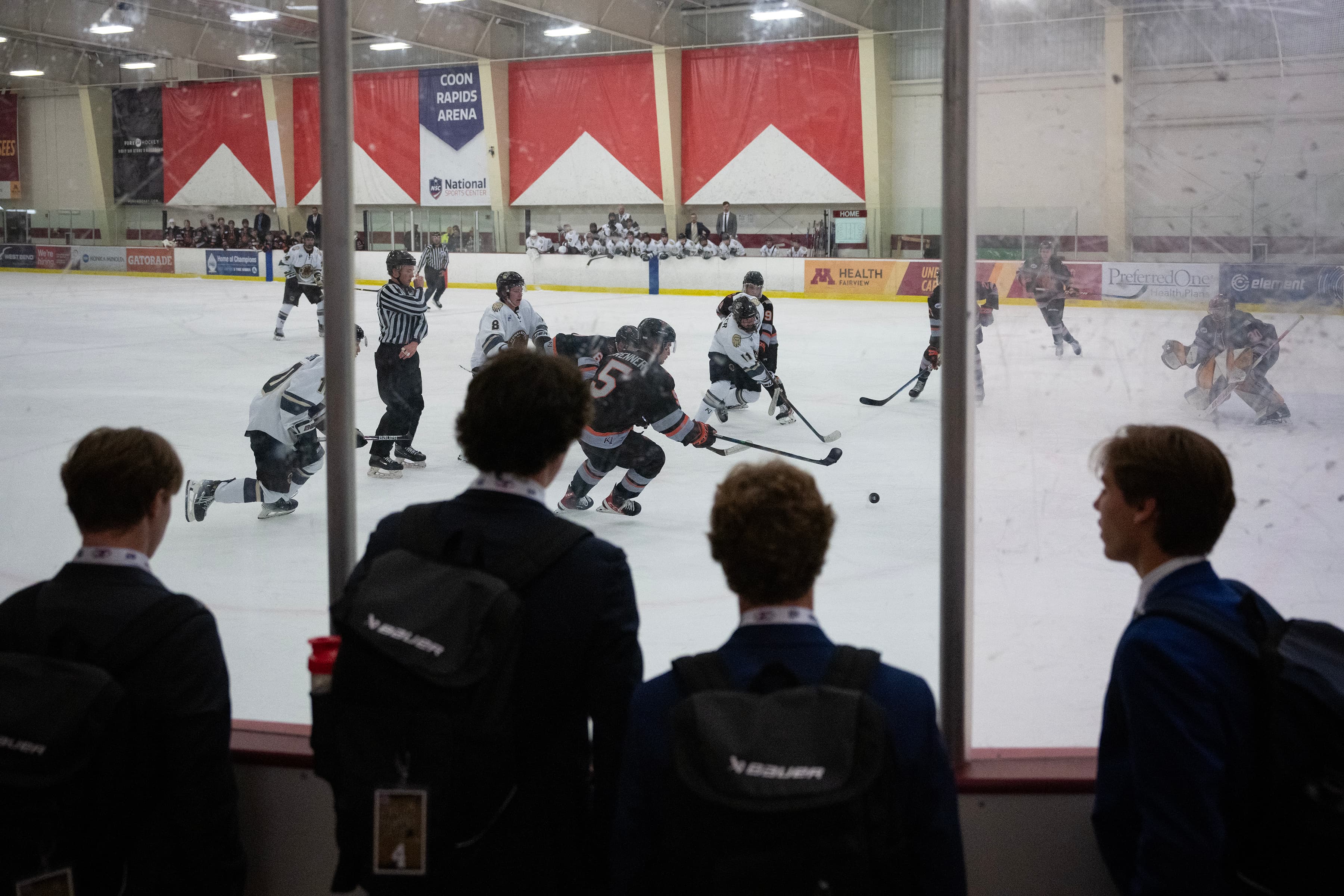
A bill passed in 1995 is still quietly ensuring Minnesota ice rinks remain public.
By Olivia Hicks
The Minnesota Star Tribune
When Bob Milbert joined the Minnesota House of Representatives in 1987, he saw a glaring problem across the state.
“There was not enough ice time for the boys, let alone the girls,” the 76-year-old former DFL representative recalled.
From skating on the South St. Paul roster in the 1960s to playing Division I hockey for Dartmouth, Milbert knew the sport well, and he used that to author one of the most impactful pieces of hockey legislation in Minnesota.
In 1972, soon after Title IX passed, girls hockey in Minnesota boomed. But the number of ice rinks wasn’t growing at a parallel rate.
As a result, Milbert introduced the James Metzen Mighty Ducks Ice Center Development Act grant program in 1995 — named after Milbert’s co-author, former Minnesota state senator Metzen, and the 1992 Disney hockey comedy “The Mighty Ducks” — to build hockey rinks across the state to boost girls hockey ice time.
Milbert stood in front of the Legislature with a speech prepared: “A lot of communities are only able to have one A-team at any level, because there’s not enough ice time. These kids who don’t make the top team, they don’t play anymore because there’s no place for them to play. Just like in the ‘Mighty Ducks’ movie.”
The bill passed without pushback. In only five years, the program constructed 61 sheets of ice across Minnesota with $18 million in state funding overseen by the Minnesota Amateur Sports Commission (MASC).
“It’s a wonderful, wonderful success story, and I’m really proud of the legacy,” Milbert said. “The great love of my life is this hockey stuff.”
More than three decades later, the Mighty Ducks Act’s impact can be felt across the state.
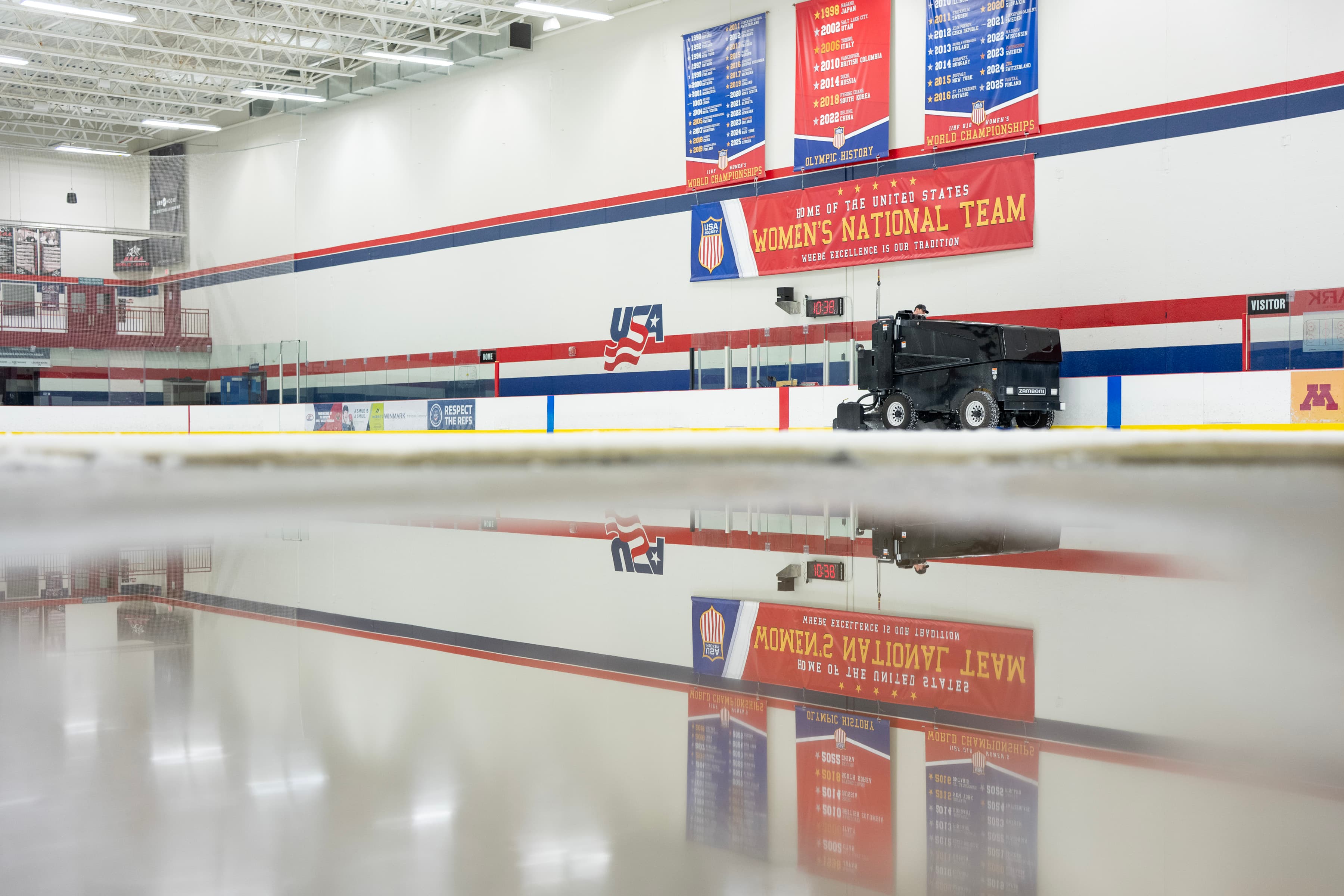
Todd Johnson, the executive director of MASC and former page to the House speaker in 1987, is the man now running the whole operation, housed next door to the National Sports Center’s Super Rink and its eight sheets of ice in Blaine. He credits the Mighty Ducks Act with keeping Minnesota’s 200-plus ice rinks low-cost, accessible and public.
“Whether it’s accidental or intentional, Minnesota making the decision as communities to say that hockey rinks were just as important as swimming pools, that tradition just continues,” Johnson said. “It’s a culture in a way.”
As other states move toward a privately funded amateur hockey model with rising ice time costs for families, Minnesota continues to stand out with its use of city and state dollars, often through the Mighty Ducks Act, to fund the construction and maintenance of public rinks.
“[In other states], it’s not community-based, team-based hockey the way we have in Minnesota,” Milbert said. “That’s just the way we roll; we like these public facilities to be there.”
Johnson and his staff often travel 20 miles to the Capitol to advocate and lobby for Mighty Ducks Act funding and oversee the grant program, which has evolved to provide funding to maintain rinks and switch out the now-banned ice rink refrigerant R-22, also known as Freon.
“It helped establish all these public arenas everywhere,” said Mighty Ducks grant administrator Jayme Murphy. “Now we’re at the point where everyone has to fix or renovate or replace pieces in their arena.”
State funding has awarded 116 grants in renovations and 82 grants in new arena construction to date. The act, averaging $1 million in annual state dollars the past couple of years, is typically spread across four rinks, with Mankato’s All Seasons Arena recently receiving $166,000 in Mighty Ducks funding. Cities and booster clubs across the state are investing more than $300 million in rink improvements with help from Mighty Ducks Act funding.
The commission’s work has directly led to Minnesota’s status as the top producer of female hockey players in the nation, including 207 Minnesota women playing Division I college programs during the 2025-26 season. During the previous season, 16% of all girls and women hockey players in the nation were registered to play in Minnesota.
In Massachusetts and Michigan, publicly owned rinks are often acquired by private companies. Murphy emphasized that amateur sports across the nation are at a turning point worth paying close attention to.
“Mighty Ducks gives a little bit to be able to help this, but we’re at this inflection point where sports infrastructure is just very costly everywhere,” Murphy said. “When I started overseeing this program, I saw projects coming in under a million dollars. Now I see projects up to $4 million.”
Said Johnson: “We are a pressure reliever for some of those other governmental entities, whether it’s a school district or a city’s rec department. I know some of our tenants have looked at building their own, and then you look at the price to build a nice arena — a two-sheeter can cost you $40-plus million right now."
Without a dedication to keeping rinks public, Johnson warned, “The breakdown of the community culture for hockey would be a tragedy, right?
“I think it has to be a little bit more intentional, even on the government side, to figure out that this is a public policy decision we’ve made, and we think it’s endemic to this society and part of our community to have these facilities,” Johnson said. “It’s the history of the sport.”
About the Author
Olivia Hicks
Strib Varsity Reporter
Olivia Hicks is a reporter for the Minnesota Star Tribune.
See More
Comments