Minnesota’s largest indoor ice rink is in desperate need of repair
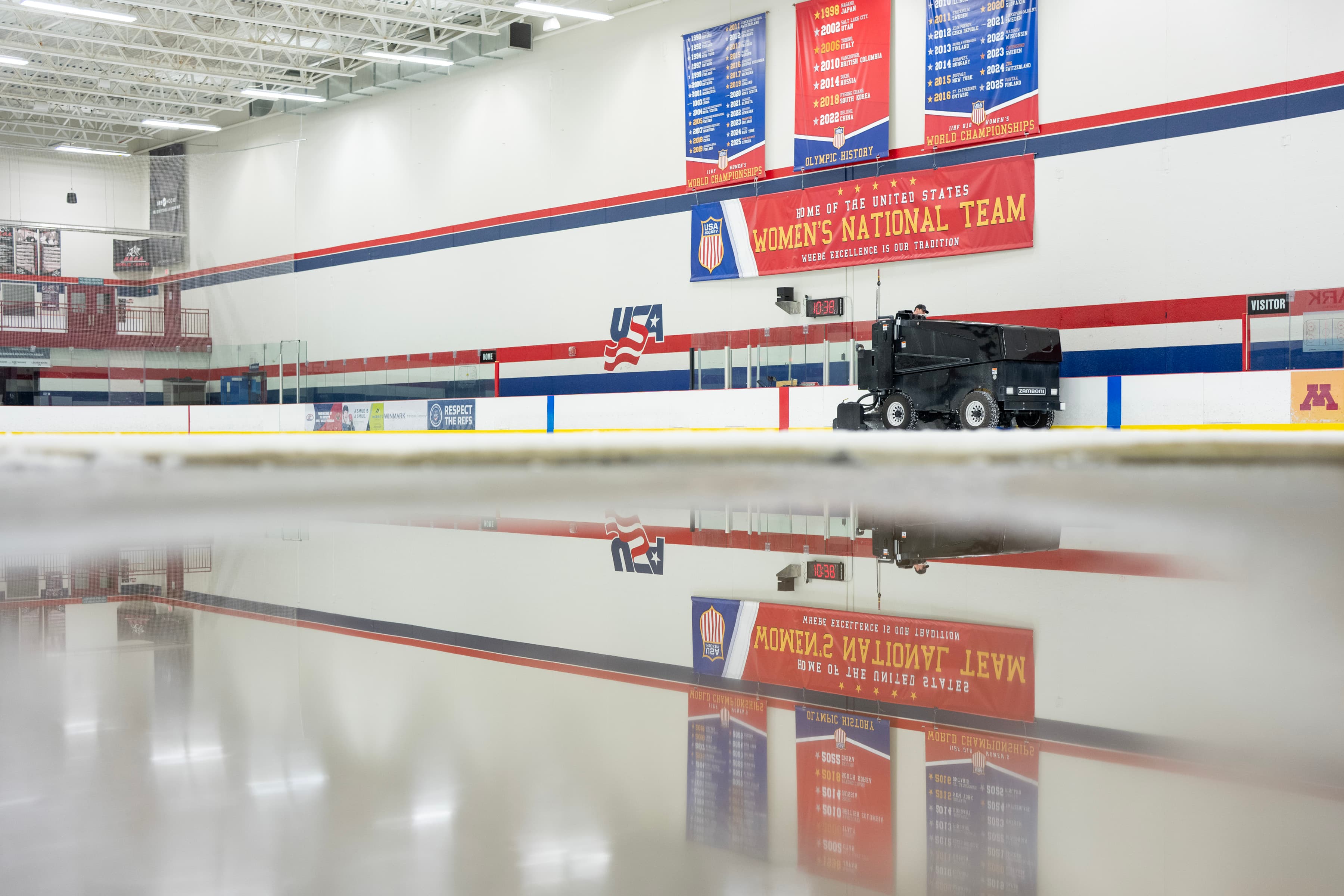
Strib VarsityThe NSC Super Rink is where the U.S. women’s Olympic roster, Bethel University and a handful of local high school and youth hockey teams skate.
By Olivia Hicks
The Minnesota Star Tribune
Four compressors, with the rumble of V10 engines, noisily clanged deep within the National Sports Center Super Rink, keeping the arena near arctic temps on a warm early spring morning in Blaine.
Minnesota Amateur Sports Commission (MASC) executive director Todd Johnson and grant administrator Jayme Murphy stood among a worn-down arrangement of blue, yellow and red pipes inside one of the rink’s two refrigeration plants.
As executive director, Johnson and his small staff oversee the complex’s 18-hole golf course, 5,000-seat stadium, 110-foot dome, 50-plus outdoor athletic fields and four baseball diamonds. But the Super Rink is what skaters from across the country come for, and it’s in dire need of an upgrade, said Johnson.
One saltwater pump is corroded, another bulging and held up by a sophisticated support system of plywood and bungee cords. An empty space occupies where a swing pump should be, acting as a backup in case the pipes break. The cylindrical tank running horizontally across the far wall, labeled “R-22,” desperately needs replacing — its contents are no longer legal to import or produce in the U.S. because of air quality and environmental concerns.
If the system malfunctioned or a pump gave out, ice where the U.S. women’s Olympic roster, Bethel University and a handful of high school and youth hockey teams skate would melt in fewer than 24 hours.
The Super Rink has been able to get by on limited revenues and DIY fixes, but rink improvements are nearly 10 years overdue. And the signs of wear and tear are visible from the corroded cooling system to the sagging boards, sitting atop floors of sand instead of the more expensive but sturdier concrete alternative.
MASC asked the state legislature for a $23.7 million bond in hopes of building a central cooling plant that is up to date, refrigerates all eight sheets and can keep up with summer crowds, tournaments and temperatures — the busiest, and hottest, time of year.
The funds request also includes an extra $4.5 million in NSC asset preservation and $1 million to support the James Metzen Mighty Ducks Ice Center Development Act grant program that the MASC oversees and allocates to rinks across the state for R-22 replacement.
“This is what the Mighty Ducks Act is doing across the state, helping these public arenas make these changes,” said Murphy, gesturing to the cooling plant. “The irony is, we’re the one giving out [grants].”
Related Coverage
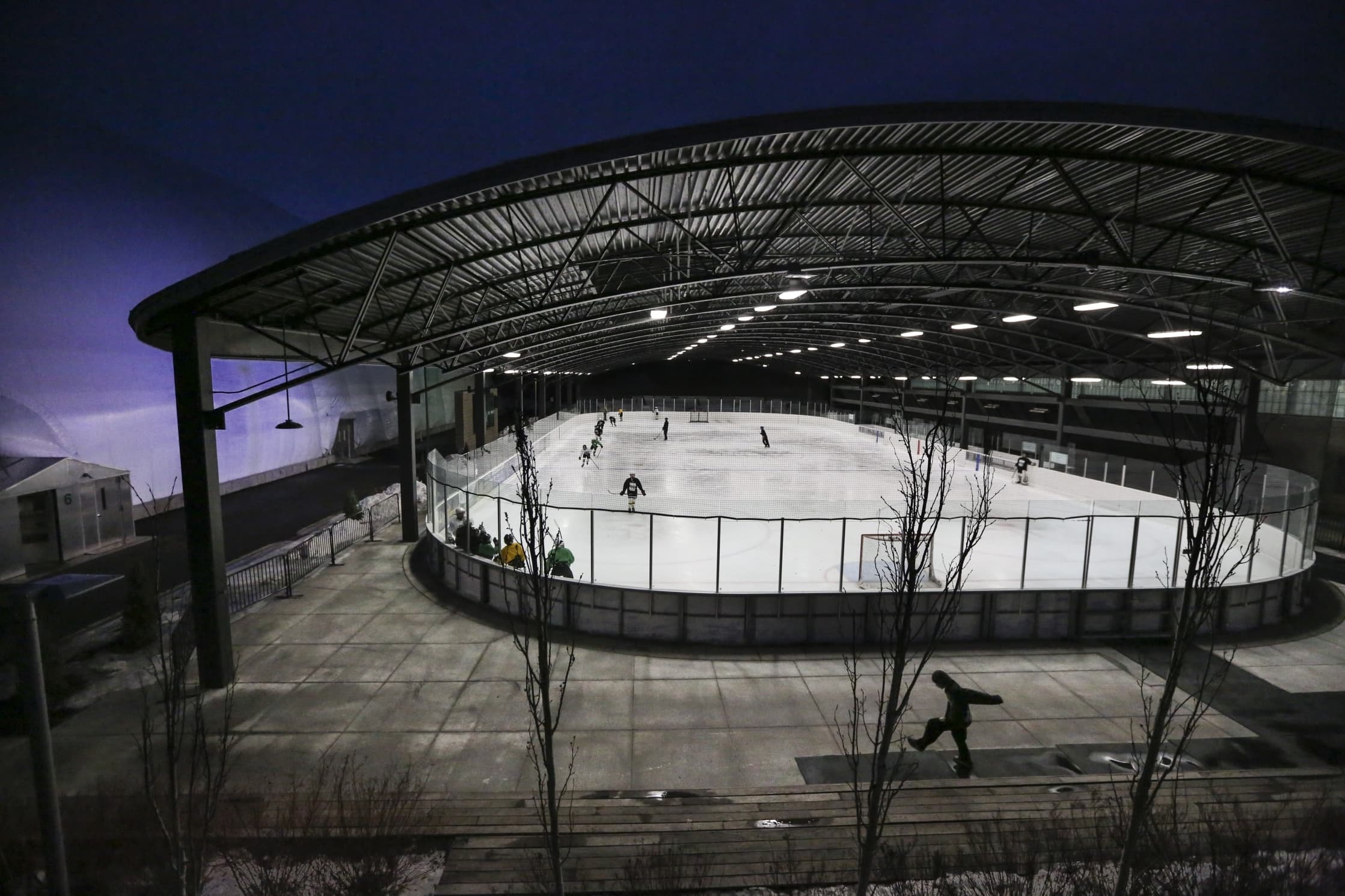

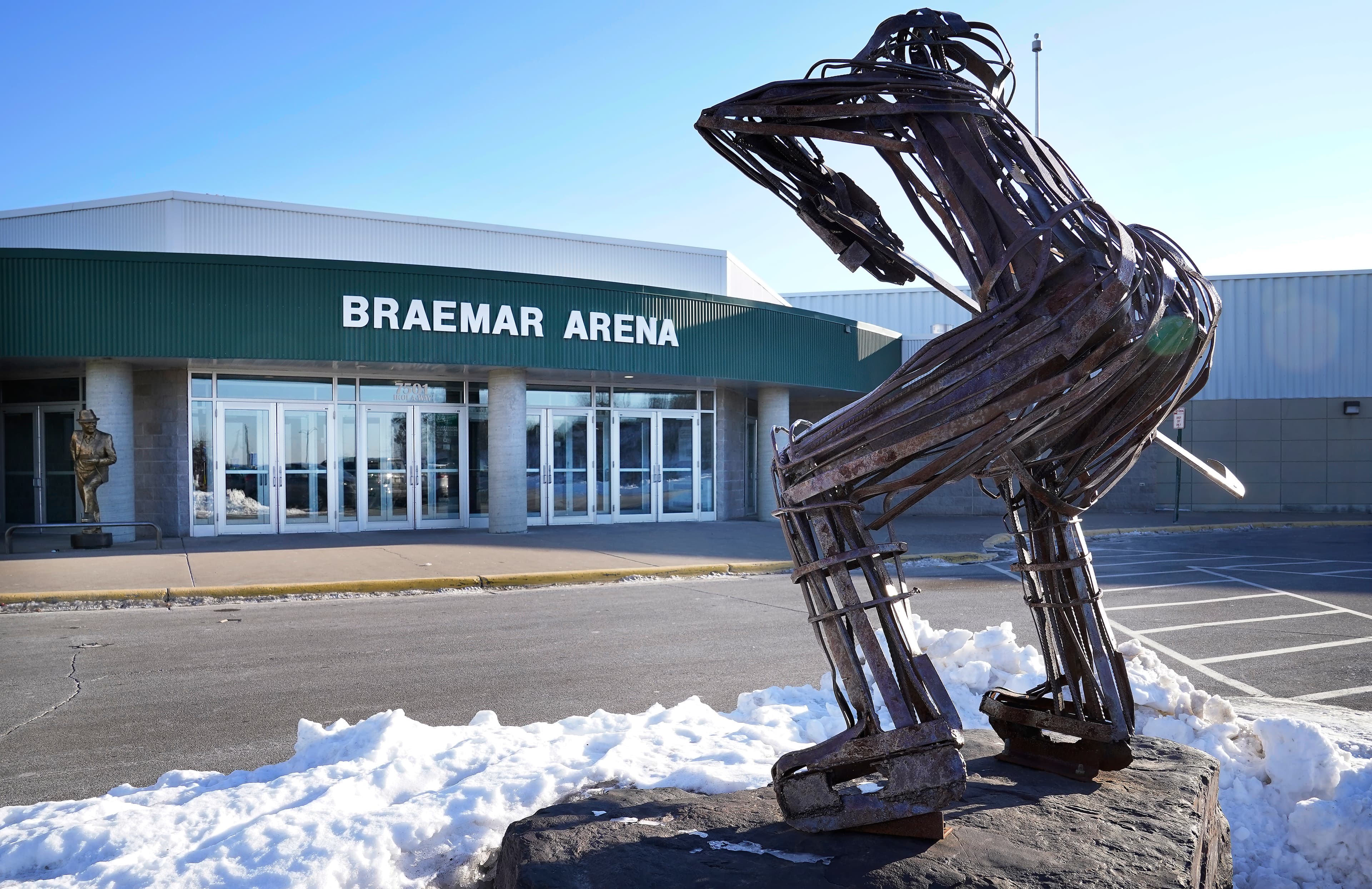
The NSC was originally built as a “proof of concept” ahead of the 1996 Summer Olympic Games. When Minneapolis lost to Atlanta for the U.S. host bid, Johnson remembers a question emerged: “What are we going to do with this place?”
The NSC’s hodgepodge of sports complexes took form. It became the site of state high school track meets and the All-American Girls Soccer Tournament, along with the USA Weightlifting National Championships and the North American Indigenous Games, to name a few of the many events in its history.
“Then along came hockey, and we added the eight sheets of ice,” Johnson recalled. “Part of it was because of the Mighty Ducks money. We fundraised and got that done ourselves, but it really was the impetus for it.”
Now, the Super Rink has its own Olympic claim to fame.
Shiny names that have sliced skates through Super Rink ice — like Team USA alternate captain Megan Keller, who scored the gold medal-winning overtime goal against Canada in the 2026 Winter Olympic Games, and Alysa Liu, who won gold with a routine to Donna Summer’s “MacArthur Park Suite” — offer good marketing material and sales pitch for repairs.
It’s the local teams, though, that keep the place running and rely on easy access to a community rink: The Mounds View Irondale youth and high school hockey teams call the rink home, along with Blaine’s hockey association, Centennial’s youth hockey program and others.
“You look at the pyramid of sport participation, you’re worried just as much about the bottom of that base,” Murphy said. “Competitive play is great, but recreational play is very important too. That’s something that doesn’t have a monetary value but has a real societal value.”
The MASC staff is hyper-aware of the need to preserve community ice access and the money needed to sustain one of the largest hockey complexes in the world, with two million annual visitors and nearly $100 million in economic impact. But the Super Rink won’t lean on Mighty Ducks Act funding to build a new cooling plant because of the grant program’s reimbursement and matching prerequisites, requiring rinks to have full funding up front before grant dollars are paid out after construction is complete.
Instead, the grants can go toward smaller public rinks across Minnesota while MASC lobbies the legislature for its own separate bond.
“The likelihood we get the amount needed to accomplish the project is pretty minimal this session,” Murphy said. “We just worried the plant could fail before we get the money to do the project.”
For now, small fixes, like a new scoreboard, make all the difference.
Comments