These cities are investing millions in hockey rinks used by high school and youth players
Strib VarsityAmong the projects is an ice rink attached to the $70 million Minnesota Hockey Hall of Fame’s facility in Inver Grove Heights.
The Minnesota Star Tribune
It’s often said Minnesota has just two seasons — winter and road construction — but once high school hockey ends, there’s arena construction season, too.
Last spring, the $37 million Bloomington Ice Garden project was coming together, just as the $175 million Lee and Penny Anderson Arena did at St. Thomas.
Despite rising costs for construction materials and labor driven by supply chain issues and worker shortages, Minnesota communities continue to invest heavily into hockey rinks for the state’s young skaters.
“Most Minnesotans think of ice arenas in the same way they think of playgrounds, bike paths, football fields and other important community assets,” Wild Vice President Mike Snee said. “For the most part, people in the rest of the country don’t look at ice arenas in the same way Minnesotans do, and it’s what sets our state apart from the rest.”
A look around the state shows 11 hockey construction projects either started, planned or recently completed. The combined investment for those projects could surpass $300 million — and much of that is public money. Here’s a closer look:
Hermantown
This past season, the Hermantown boys hockey team didn’t advance to the state tournament for the first time since 2019, but the Hawks still had reason to celebrate. In December, the city opened NorthStar Ford Arena after a $25 million renovation.
What’s changing: With just one ice sheet, it was tough for Hermantown to find practice and game times for all of its boys and girls youth programs. The project added a second ice sheet to the arena, which is now home for the varsity teams.
Financing: Hermantown received $7.5 million in state bonding toward the project. Another $11 million is expected from a local sales tax increase of half a percentage point, approved by voters in 2022. Hermantown also raised $6.5 million in donations and sponsorships.
Northfield
Built in 1974, Northfield Ice Arena closed in March, but not before launching another team toward a special memory. Northfield won the Pee Wee-A state championship as construction continued on a new $25 million two-rink facility that’s set to open in August.
What’s changing: The old arena was definitely showing its age, and parents said it led some of Northfield’s top players to leave for other hockey communities.
Financing: The arena is projected to cost $26.5 million, with Northfield paying 88% and Dundas 12%.
Mankato
All Seasons Arena opened in 1973 and was in dire need of repair when Mankato approved a major renovation plan in 2024. The $14 million project ended this month, with both rinks all shined up for high school teams at Mankato East and West, plus the city’s youth program.
What’s changing: Upgrades to the north rink included new ice making and refrigeration systems while renovations improved the south rink’s lobby.
Financing: The total cost climbed to $14 million, with Mankato ($8 million) and North Mankato ($3.175 million) selling bonds to finance the project. The cities used $3 million in already-raised local tax revenue and received a $166,000 “Mighty Ducks” grant from the state of Minnesota.
Edina
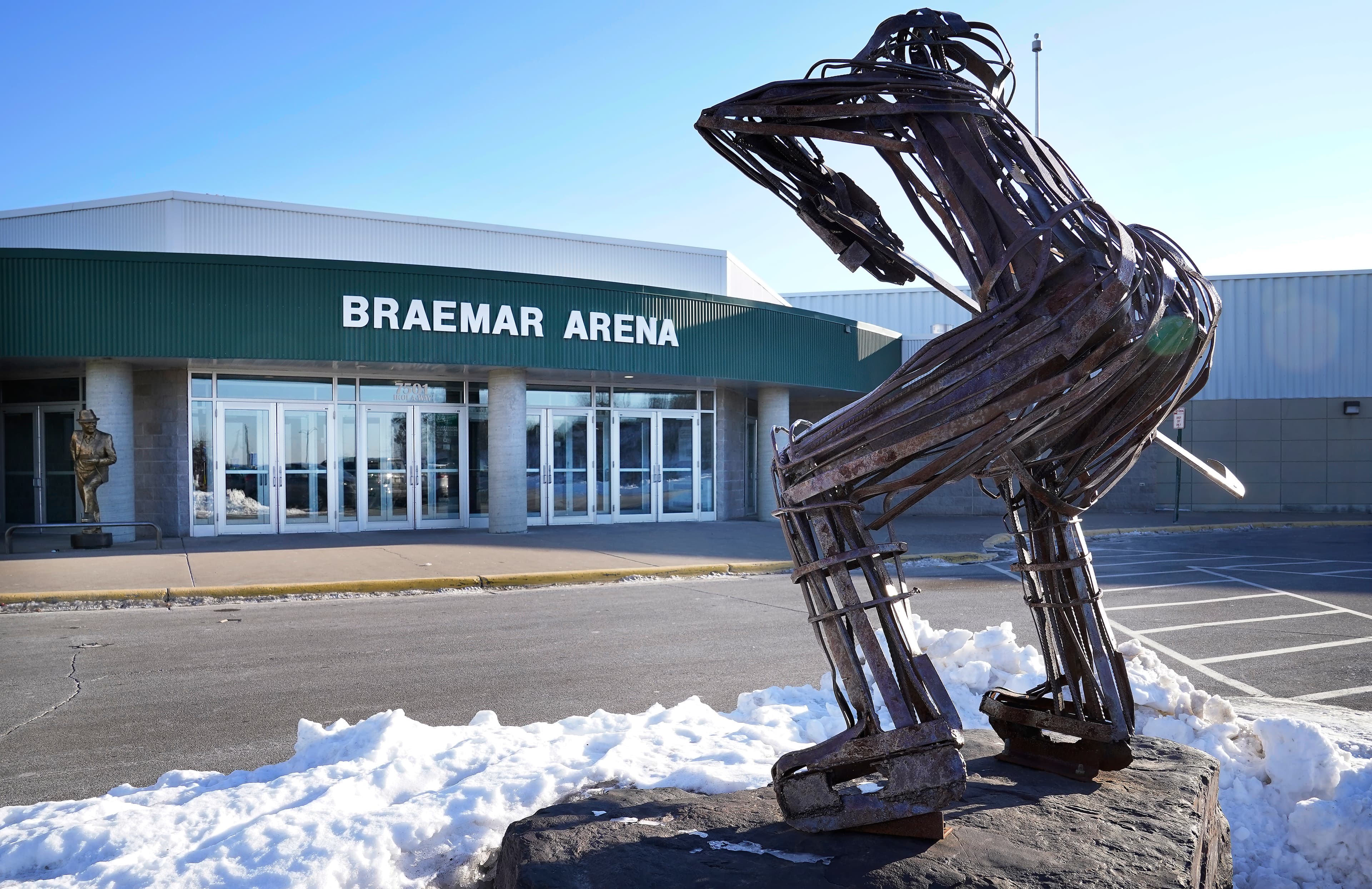
You might not notice big changes next season for Braemar Arena’s west rink, built in 1965 and still home for the Edina varsity teams, but the arena complex itself will see improvements in coming years as part of a $45.2 million facelift. Edina even moved up the start of construction from late summer to mid-March.
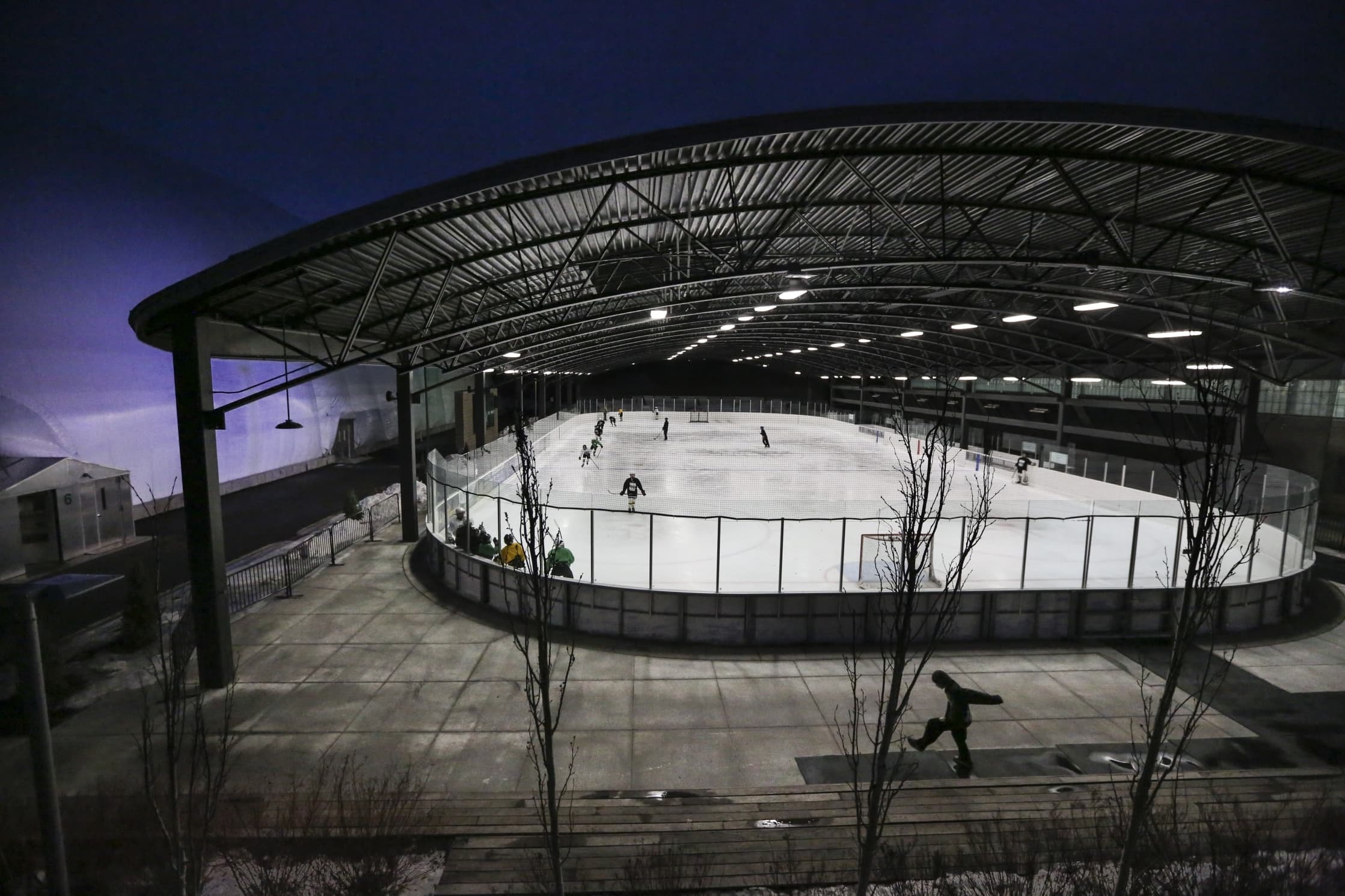
What’s changing: A new floor and dasher boards are coming for the south and east rinks. Eventually, Edina plans to convert Braemar’s fourth rink — a covered, refrigerated outdoor rink — into an indoor rink. The city says the goal is to “create greater event scheduling flexibility year-round, take weather conditions out of the equation and allow more spectators to enjoy the action at Braemar.”
Financing: The project will be financed through a half-cent sales tax, approved by Edina voters in 2022.
Maple Grove
Maple Grove Community Center already had a glistening main rink and a second sheet of ice. Now there’s a third rink at the sprawling community center for the city’s burgeoning hockey and figure skating associations.
What’s changing: The first phase of the project, now completed, included the new ice sheet, a new arena entrance and lobby and locker room expansions. The second phase will bring a swimming pool complex and banquet facility.
Financing: The estimated cost for phase one of the community center project — the phase with the ice rink upgrades — is $40.2 million. The full project is expected to cost $116 million. Much of that is being funded by a half-cent local sales tax that voters approved in 2022.
Orono
The Minneapolis/St. Paul Business Journal took note when Orono Ice Arena Inc. purchased a lot adjacent to the arena. That nonprofit is reportedly seeking $15 million in private donations to renovate “The Rink,” as locals call it, and add a second ice sheet.
What’s changing: Besides helping meet the city’s need for ice time, the project would upgrade locker rooms and add lounge space and concessions.
Financing: The Business Journal said there are no city bonds or tax dollars involved, just donations.
Warroad
With a population of about 2,000, Warroad has a reputation for keeping its ice rinks available almost 365 days per year. Now the town has three indoor ice sheets.
What’s changing: In February, the new “Outlaw Rink” — which is two-thirds the size of a regulation rink — became the city’s third indoor ice sheet, joining Gardens Arena and Olympic Arena.
Financing: The Warroad Memorial Arena Association Inc., a nonprofit, is handling the unspecified cost of the project and accepting donations.
Plymouth
Plymouth Ice Center (PIC) is home to the Wayzata and Providence Academy boys and girls hockey teams, along with Wayzata’s youth hockey program.
What’s changing: Opened in 1996, PIC already has three ice sheets, but the city is considering adding a fourth rink to meet ice time demand. The project would also modernize the building’s interior and exterior.
Financing: The ice arena renovations could cost $55 million, with the whole project totaling $135 million. This could end up on the November ballot for Plymouth voters.
Rogers
Rogers had one of the state’s best Class 2A boys varsity teams this season, only to suffer a heartbreaking 5-2 loss to Wayzata in the section semifinals. By late February, plans to add a second ice sheet to Rogers’ arena were moving along.
What’s changing: The project is on pace to finish by Sept. 1. Rogers will have more available ice time and a spruced-up arena.
Financing: Rogers youth hockey association made a $2 million payment and will pay an additional $500,000 every December for 10 years. The city will contribute $1.5 million.
Delano
Delano reached the Class 1A boys state semifinals and has some momentum with facilities now, too. In December, the city opened Spirit Park, a covered outdoor refrigerated rink, giving Minnesota an eighth rink like this, including in St. Louis Park and Eagan.
What’s changing: The city built the new rink as an attachment to the Delano Sports Arena, which opened in 1990.
Financing: The project price tag was $5.9 million, with $2.5 coming from the city and $3.4 million from the Delano youth hockey association.
Inver Grove Heights
This one’s still on the horizon, but by 2028, Inver Grove Heights plans will be home to a 120,000 square-foot Minnesota Hockey Hall of Fame facility with a state-of-the-art arena. Minnesota hockey legend Natalie Darwitz is the hall’s CEO.
What’s changing: In mid-December, organizers announced that they have picked the site location along Interstate 494 and Argenta Trail, just east of the Vikings practice facility in Eagan.
Financing: The projected cost of the project is $70 million.
About the Author
Joe Christensen
Strib Varsity Enterprise Reporter
Joe Christensen is our Strib Varsity Enterprise Reporter and moved into this position after several years as an editor. Joe graduated from the University of Minnesota and spent 15 years covering Major League Baseball, including stops at the Riverside Press-Enterprise and Baltimore Sun. He joined the Minnesota Star Tribune in 2005.
See More
Comments