Youngest baseball pitchers are now the majority of elbow ligament replacement surgeries
Amateur baseball elbow injuries are on the rise nationally. An expert weighs in on Minnesota’s status.
By Olivia Hicks
The Minnesota Star Tribune
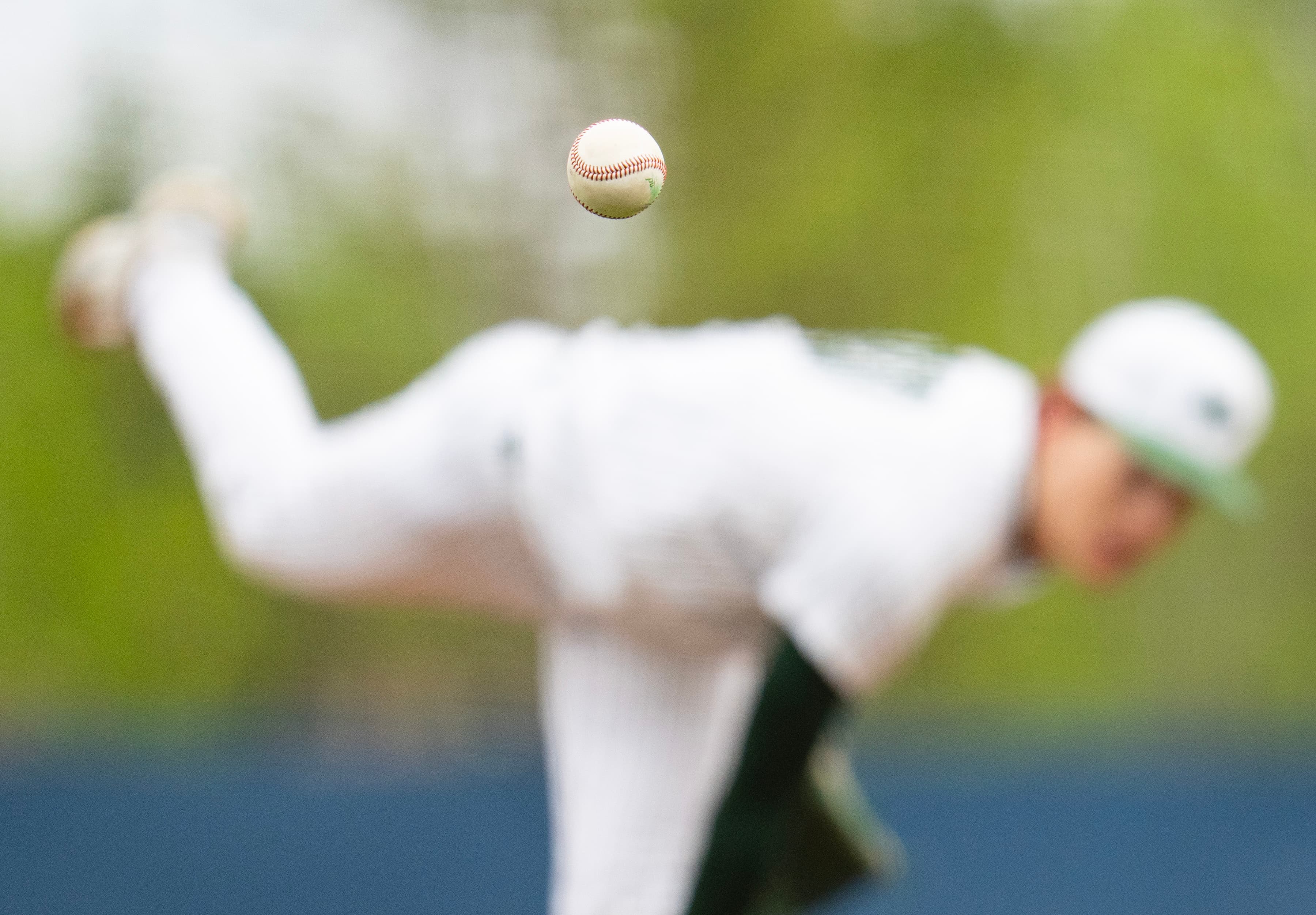
Over the past 20 years, orthopedic experts have seen a troubling trend: Youth and amateur baseball elbow and shoulder injuries have soared as pro-style pitching speeds and arm overuse create the perfect recipe for tears.
In the late 90s, youth and high school baseball players made up only 10% of all Tommy John elbow ligament replacement surgeries at the Andrews Sports Medicine and Orthopedic Center in Alabama, one of the nation’s top hospitals for the operation. By 2021, that number jumped to 52% as high schoolers became the fastest-growing group for baseball-related elbow and shoulder injuries.
Strib Varsity sat down with Dr. Allison Rao, an orthopedic surgeon who specializes in shoulder and elbow sports medicine for M Health Fairview and the University of Minnesota Medical School to learn more about how Minnesota fits into the national trend and what parents and players can do to alleviate the risk of injury.
This interview has been edited for length and clarity.
Q When we talk about the difference between Minnesota and the national trend, have you seen the number of surgeries rise dramatically in Minnesota? Are you seeing more young baseball players every year that you’re operating on?
A Overall, the trend would say that it’s increasing. Nationally, there’s a trend towards it being done more and more frequently. But Minnesota is not at that same national rate, which is lucky for us. It’s because Minnesotans, wisely, take the breaks and do multi-sports, which makes them better athletes, that we’re not seeing quite as big of an issue of it being done so much here.
Q From a national perspective, we’re seeing an increase in injuries at a very young age. Some are calling it the breaking point of baseball. Others are calling it an elbow injury epidemic. If you could sum up the current state of baseball injuries in high school-aged and youth players, what would you say?
A I understand why people use the word epidemic. There’s really clearly been a troubling rise in elbow trouble amongst young throwers. So, whether you want to use that exact word or not, the bigger point is that the trend is really serious, and it’s not random.
There are a couple of main drivers: One is that there’s too much throwing. There are too many months per year that they’re throwing. They’re pitching even once they get to that fatigued state, pitching for multiple teams and even throwing in showcases without enough preparation for recovery. [There’s] an increasing focus on velocity, especially at a younger and younger age. Among all of the known risk factors, pitching with fatigue really stands out as one of the biggest issues that we’re seeing.
When you say the word epidemic, I don’t think it’s like a mysterious problem. We know that there’s a clear cause to what’s leading to the problem, especially the modern youth baseball environment in which they’re essentially being asked to do what professional players do, but in a still-developing body. That’s led us to the state that we’re in. In Minnesota, I would say it’s a little bit different, but we are still seeing that problem.

Q When you say that it’s different in Minnesota, I’m curious what you mean. We pride ourselves on being a state of two- and three-sport athletes. How does playing multiple sports across multiple seasons impact the risk of injury for high school-aged athletes?
A It’s actually a good thing. Playing multiple sports is what you want for young athletes. It gives the body sort of a natural change of pace. It works different muscle groups, broader athletic skills and reduces the repetitive stress that comes from doing the exact same motion year-round. That matters a lot in baseball, where you’re pitching in an extremely repetitive movement for the shoulder and elbow.
Sports medicine experts consistently show concern that early sports specialization and high year-round training volume raise the overall risk of overuse injury and burnout. The arm loves baseball, but it also really loves vacation. If you’re a multisport participant, it’s not a magic shield against injury, but it’s usually healthier than doing 10 to 12 months of baseball with no real off-season.
Q Baseball injuries have changed both in the number of injuries and the type of elbow tears in recent years, with new methods of pitching and young players attempting to recreate pro ball styles. Are you seeing this in Minnesota? What is the most common injury you see in young baseball players?
A In younger players who are still growing, the most common elbow problem is called Little Leaguer’s elbow. Medial apophysitis is the medical term for it. There’s irritation of the growth plate on the inside of the elbow that comes from too much throwing. The Academy of Orthopedic Surgeons identifies it as one of the most common elbow problems in active children.
Then, as you become more skeletally mature through high school, we start seeing more of those true ligament injuries. The buzzword everyone hears about is Tommy John surgery. It should never be done prophylactically. It’s not mainstream in Minnesota to do it prophylactically locally. It’s one of the biggest myths in baseball: Tommy John surgery does not make the elbow healthier or even better. It doesn’t reliably increase your velocity; it does not protect against future injury.
Q When it comes to preventative measures — whether it’s pitching limits, taking time off, giving your arm a break or playing other sports — what things can players be doing? What can parents tell their student-athletes to educate them on preventative measures?
A Pitch limits, whether that’s in a given practice or game. There has to be built-in rest, you cannot do year-round throwing. There has to be focus on strength, and not just arm strength, but full body strength. There has to be proper mechanics, and there has to be a culture in which there can be honest reporting of pain and that comes from parents and coaches.
Q Trying to prevent pitching through fatigue and recreating pro-ball styles in youth bodies and arms seems like a difficult thing to limit and get at the root cause of. It seems like more of a cultural problem in youth sports. How do you target something like that?
A It’s like a badge of honor. [Prevention] comes from all levels of people involved with any athlete — the coaches, the parents, the players themselves, the national organizations — and that’s what they’re trying to get at through the MLB is to say, “It’s not a badge of honor to play through pain. It’s your body telling you to rest.”
Q Any other advice or information for families and players?
A: MLB Pitch Smart, it’s a safety playbook for young pitchers, and it’s a set of evidence-based guidelines created by Major League Baseball and medical experts to really try to help reduce arm injuries in young kids and teens.
About the Author
Olivia Hicks
Strib Varsity Reporter
Olivia Hicks is a reporter for the Minnesota Star Tribune.
See More
Comments