Host with the most: How Minnesota won the IIHF World Junior Championship bid
Hockey Across Minnesota: After 43 years, the World Juniors have returned to the Twin Cities. Here’s how Minnesota landed the gig.
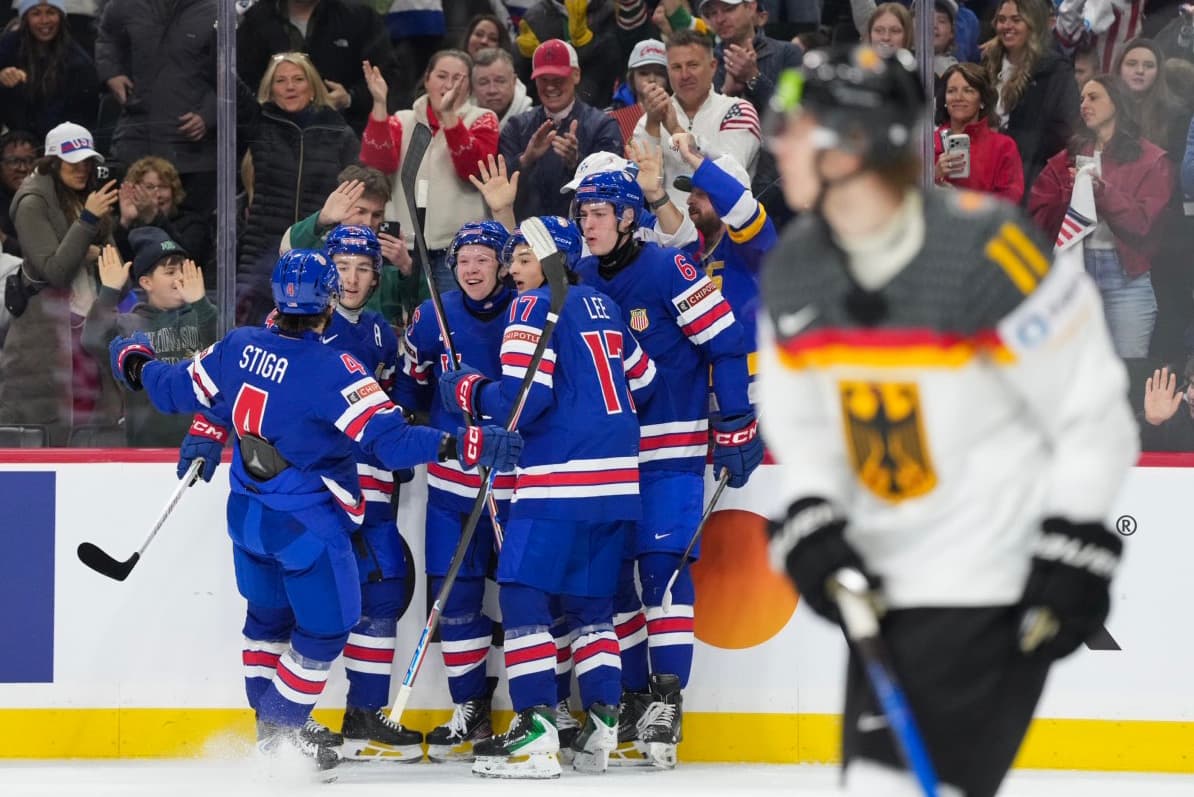
By Olivia Hicks
The Minnesota Star Tribune
There are a few essentials to being a good host: have enough space to accommodate your guests, bring the energy and make sure the bowl of Old Dutch potato chips never empties.
When Minnesota set its sights on hosting the 2025-26 International Ice Hockey Federation (IIHF) World Junior Championship 2½ years ago, it knew it had all the traits of a perfect host.
Minnesota had the rinks, the public transit, the interest and the hockey culture to accommodate a sporting event that spanned across the state. It is, after all, the “State of Hockey.”
The World Junior tournament is a bit like a miniature Winter Olympics, but just for the future stars of the stick-wielding sport. The competition, played over 11 days, offers athletes under 20 years old the chance to represent their home countries.
So, when the list of potential markets dwindled from 10 to a final two — the Twin Cities and Seattle — representatives from Minnesota, the largest exporter of NHL and Division I college hockey talent, dug their heels in.
“At that point, we basically let everyone know that it’s coming to the State of Hockey,” said John Klinkenberg, chief operating officer of Minnesota Sports and Events, the regional sports commission for the Twin Cities that helped pitch Minnesota as host. “Being that it was the 50th anniversary World Junior hockey tournament, we knew it had to come here.”
The Minnesota sales pitch
When Klinkenberg began thinking about turning the state into a venue for 10 national hockey teams three years ago, there was an easy confidence in what Minnesota had to offer.
It had experience: The Twin Cities hosted the tournament in 1982, and a handful of games spilled over state lines when Thief River Falls, Minn., and Grand Forks, N.D., co-hosted the 2005 World Juniors.
The initial bidding process mostly involved paperwork as the tedious task of working out the logistics began: who will host what, what does availability look like and who will help fund it?
“This bid process was kind of unlike any other,” Klinkenberg said.
But the real fun, and pitch, began once representatives from USA Hockey — the nation’s hockey governing body — touched down at Minneapolis-St. Paul International Airport.
Related Coverage


“When the people from USA Hockey were here doing a site visit, we actually got to spend some time with the governor and emphasize the State of Hockey,” Klinkenberg said, adding that the state Legislature helped offset some of the event cost. “I do think that was a pretty important piece to them making this decision: just seeing the support of Visit St. Paul and [Meet] Minneapolis, the University of Minnesota and the Wild.”
It worked. The strength of Minnesota’s community-centered, grass-roots approach to hockey was a big sell, said Tony Driscoll, the assistant executive director of marketing, communications and events for USA Hockey.
The hard part came once Minnesota received the hosting gig.
More than 10 cities in Minnesota were considered for a practice or game hosting slot, a testament to how ingrained hockey is across the state. But the decision came down to convenience, Klinkenberg said. Bemidji, Duluth, Mankato and Rochester won practice and pre-tournament series hosting duties, while the University of Minnesota’s 3M Arena at Mariucci and Grand Casino Arena in St. Paul secured game responsibilities.
The two arenas, just a 15-minute drive from each other and accessible via light rail, are the closest venues in a World Juniors Championship, according to Klinkenberg.
Accessibility was central to Minnesota’s pitch, including free fan fests in Rice Park and St. Paul RiverCentre with bumper cars, ice skating and fireworks. When the state’s sporting commission hosted the gymnastics Olympic trials in summer 2024, 200,000 people flocked to downtown Minneapolis for the event and free add-ons.
“We do try to embrace the community event. … We understand that not everyone can attend the games, but we want everyone within the state and in the region to be able to really enjoy these events,” Klinkenberg said. “That is a little bit of a secret sauce.”
The hockey secret sauce
Perhaps Minnesota’s real secret sauce is simply that it’s a hockey-obsessed state.
The numbers say it all: 59,457 Minnesotans registered with USA Hockey during the 2024-25 season. More than 20,000 fans showed up for the big-school title game in the boys hockey state tournament this past March. And the Twin Cities boast the most ice rinks per capita in the nation, according to Meet Minneapolis, the city’s tourism organization.
In the leadup to the first World Juniors game Dec. 26, the weight of hosting the tournament was hard to miss. The Mall of America was quick to shuffle a World Juniors pop-up shop into an empty storefront, and St. Paul and Minneapolis’ tourist homepages showed the victorious smiles of Team USA instead of either skyline.
“We are the community of hockey,” Klinkenberg said matter-of-factly.
The event is a chance to showcase that uniquely Minnesotan energy, he said, as well as an opportunity to see the NHL’s next stars before they make it big. All but three of the players wearing red, white and blue this year have been selected in the NHL draft. Many pro players of past and present competed in the World Juniors before launching to hockey stardom, with 28 players currently under the Minnesota Wild umbrella participating in the tournament previously.
For so many U.S. players, Minnesota was part of their development.
“For them to be able to be in their home country, in the State of Hockey, represent the red, white and blue with the fans that we know are so electric, so passionate, it’s going to be a once in a lifetime experience for a lot of these kids,” Klinkenberg said.
Minnesota might have the arenas, the players and the convenience, but amid logistical and developmental arguments for Minnesota as the host spot, the state’s romanticism of hockey won out.
It was Lou Nanne, a former North Stars player, coach and executive, whose description of the event provided the cherry on top of Minnesota’s bid: “It’s a mix between the Olympics, March Madness and the boys state high school hockey tournament,” Klinkenberg recalled him saying.
...
Hockey Across Minnesota
Minnesotans in the NHL: LaCombe shows why he’s worth big contract
Jackson LaCombe’s new contract doesn’t kick in until next season, but the Eden Prairie native is already showing why Anaheim signed him to the richest deal in team history.
LaCombe is the Ducks’ top scoring defenseman and leads everyone in average ice time.
He’s on the power play and penalty kill and netted his first career shorthanded goal Dec. 15 against the New York Rangers. Since the start of last season, LaCombe has been one of the most consistent goal-getters on the blue line — only four defensemen (Colorado’s Cale Makar, Columbus’ Zach Werenski, Washington’s Jakob Chychrun and Seattle’s Brandon Montour) have more goals than LaCombe during that time, and LaCombe set a career high in 2024-25 with 14. Not only were those the most goals by an Anaheim defenseman since 2011, but LaCombe was one of only eight Ducks defensemen to reach 40 points — exclusive company that includes the likes of Stanley Cup champions and Hall of Famers Scott Niedermayer and Chris Pronger.
Offense is nothing new for LaCombe, who racked up points at Shattuck-St. Mary’s before he was a playmaking defenseman during his four seasons with the Gophers.
Anaheim drafted LaCombe 39th overall in 2019 and after parts of three seasons, the 24-year-old signed an eight-year, $72 million contract in October that positioned him as a cornerstone for what is looking more and more like a promising future for the Ducks. Anaheim hasn’t made the playoffs since 2018 but has maintained the momentum from its strong start and is in contention with Edmonton and Vegas for the top spot in the Pacific Division. LaCombe is a big reason why.
— Sarah McLellan
College Spotlight:
It won’t count in the standings, but the Bemidji State men’s hockey team will look to build momentum on Friday, Jan. 2, when the Gophers visit Sanford Center for an exhibition. Bemidji State is one of six teams in the hunt for a CCHA title this season. The Beavers are three points behind first-place Minnesota State Mankato. Other challengers include Augustana, Michigan Tech, Bowling Green and St. Thomas. The NCAA previously used the PairWise Rankings to determine selections and seedings for its 16-team national tournament. Now the key ranking is the NPI (NCAA Power Index). In the latest NPI rankings, Minnesota State Mankato is the top CCHA team at No. 11, followed by No. 15 Augustana, No. 19 St. Thomas and No. 28 Bemidji State. The Beavers, under longtime coach Tom Serratore, played several close games before the winter break that showed their potential, even if they didn’t always get the results they wanted. Bemidji State suffered an overtime loss at North Dakota (which now ranks No. 2 in the NPI) and tied Augustana 4-4 in its final game before the break.
— Joe Christensen
Livestreams to watch
Eden Prairie (5-5-1) visits Hermantown (10-0-2) on Saturday, Jan. 3, at 1 p.m. in a battle between two boys hockey teams. Proctor/Hermantown’s girls hockey team plays host to North Shore the same day at noon.
This week’s apple
Strib Varsity reporter Cassidy Hettesheimer offered readers a glimpse into what happens when teammates commit to rival colleges: “We’ll still be friends, hopefully,” said future Gopher Katya Sander. Her Holy Family teammates and Wisconsin commits responded with a “Wait, whoa, whoa. Hopefully?”
Comments