Eden Prairie softball pitcher Addison Neiss succeeds despite having scoliosis
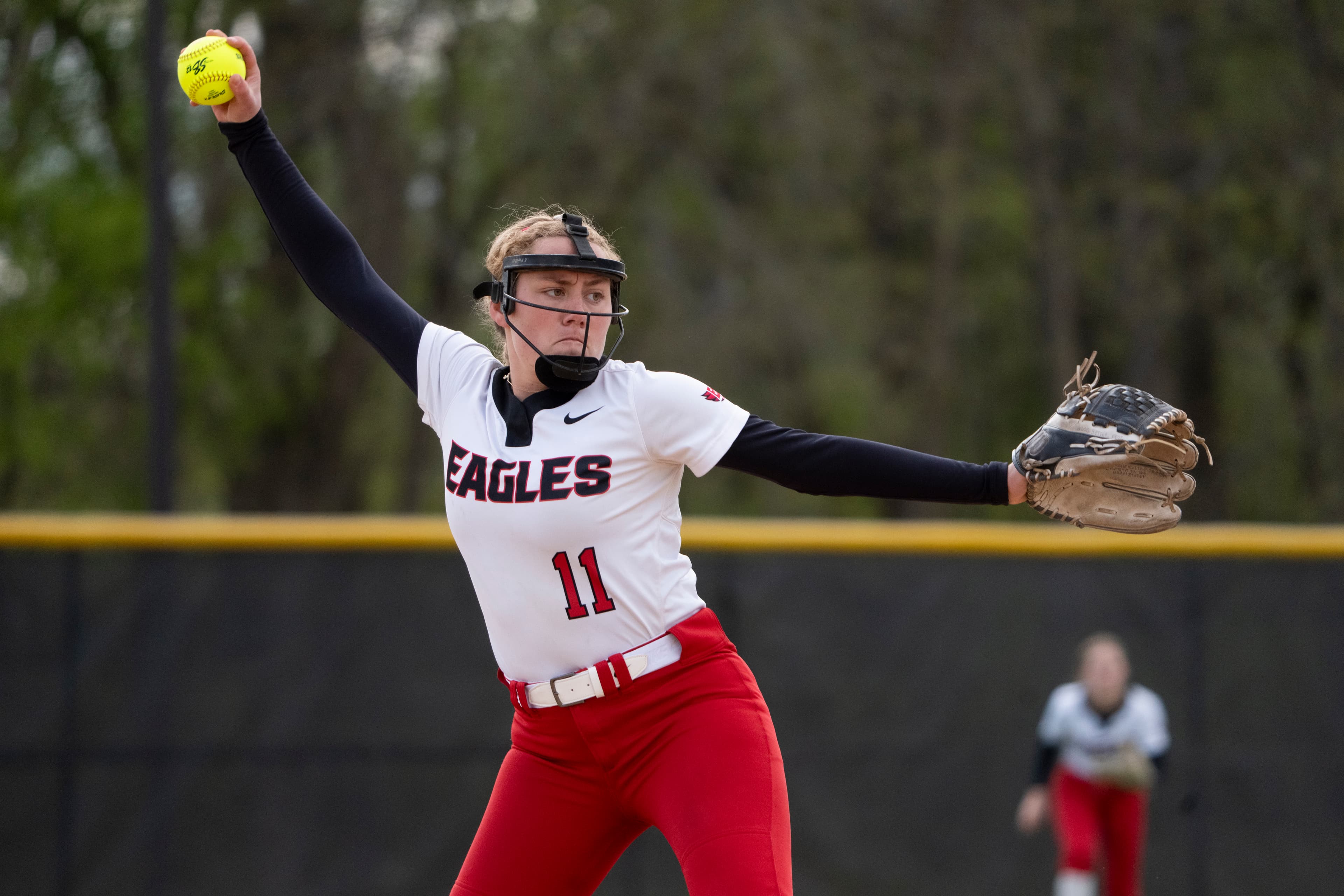
Against Buffalo on April 22, Neiss threw a perfect game. She has 122 strikeouts this season.
By Jim Paulsen
The Minnesota Star Tribune
Addison Neiss was well into her softball life when doctors delivered the news.
She was in the seventh grade and a routine physical exam uncovered a 45-degree curve in her spine — a sign of scoliosis, and a severe case at that.
In mild forms, scoliosis is commonly detected in young people. It’s diagnosed in roughly 3 million people annually, most often in adolescents between the ages of 10 and 15.
“I never understood before why I would get more sore after practice and why it took me so long to recover afterwards,” she said.
She had one worry: Would she be able to deal with the pain and discomfort enough to continue play the sport she loved?
The answer is yes. A junior on the Eden Prairie softball team, Neiss is one of Minnesota’s best young pitchers.
Against Buffalo on April 22, she threw a perfect game — retiring every batter she faced — and struck out 17 of the 21 batters she faced.
Neiss followed that performance with another shutout against Hopkins, striking out 14 while giving up one hit. It was the first time since 2007 that an Eden Prairie pitcher threw back-to-back shutouts.
Medical experts agree that a diagnosis of scoliosis doesn’t mean the end of an athlete’s career. But managing pain is still a factor every time she pitches.
Throwing through the pain
Related Coverage

Pitching a softball, with its underhand delivery, puts less stress on an arm than pitching a baseball. Softball pitchers often throw two or three games in a day, requiring far less recovery time before pitching again.
But this was different. The exaggerated windmill motion and explosive stride toward the plate can exert strong forces on a pitcher’s back. Significant scoliosis can lead to asymmetrical stresses on the back, often causing chronic pain and quicker rates of muscle fatigue.
When Neiss learned she had scoliosis, she was fitted with a back brace.
“It was an overwhelming feeling to have it on,” she said. “It was physically pushing on my spine.”
Five years after she was diagnosed, the brace is a thing of the past, replaced be a regular regimen of stretching exercises, pain relievers, rest and visits to specialists.
One cool fall day in Sioux Falls last October emphasized how important daily care is to her ability of function.
“It was cold and I was pitching a normal game,” she recalled. “I started having nerve pain in my hip. It started locking up on me and making it difficult to walk. That was kind of the straw that broke the camel’s back. The pain on that day rose to a level I’ve never felt before.”
An intense visit to a chiropractor and a few days of rest helped Neiss recover. After the episode in South Dakota, Neiss has doubled down on her self-care routines.
“My trips to the chiropractor are important because it helps with my stability. And I never go without doing my stretching exercises before or after a game,” she said. “My teammates are really supportive, but they always joke about my floor time.”
So far, she has got it under control.
The pain is still there, nearly constant when she is pitching. But, managed correctly, it’s not enough to force her to quit. Competing means too much to her.
“I never thought about quitting,” she said. “It’s more about pain management. Pain can range from about a five to an eight or a nine, depending on how much I’m doing. And the weather makes a difference.”
Good, better, best
Neiss gravitated towards pitching when she started playing softball at age 9.
“My dad was a baseball pitcher when he was young and he wanted me to try it out,” Neiss said. “I was always able to throw pretty hard. I realized I had a lot more fun pitching than anywhere else on the field because I touched the ball all the time.”
Addison, who goes by Addie, and her father spent hours at the park, working on her craft. She tried other sports, but pitching was her passion.
“When I was in 12U and we changed pitchers, I would cry,” she remembered.
Longtime Eden Prairie softball coach Dan Rubischko is impressed with Neiss’ ability to pitch at the varsity level.
“In my 42 years of coaching softball — 24 at Eden Prairie — I’ve never heard of a pitcher who threw with scoliosis,” Rubischko said. “It’s likely possible if someone plays infield or outfield. They’re not in every play of the game. But Addison wouldn’t want it any other way. She puts in a lot of time outside of practice.”
Through Tuesday, May 5, Neiss, whose fastball has been clocked at an impressive 65 mph, is 8-6 on the mound and owns a 2.58 ERA with 122 strikeouts.
While her measurables are impressive, what stands out to Rubischko is Neiss’ level of commitment.
“Her favorite football team is the Chicago Bears. The have a slogan: ‘Good, Better, Best. Never let it rest until your good is better and your better is best,’” Rubischko said. “I’m not sure about her choice of teams, but the slogan fits Addison perfectly.”
Neiss knows that as long as softball is a part of her life, this is her new “normal.” And she’s fine with that.
“I will probably have to do this for the rest of my life, but I just love softball,” she said.
About the Author
Jim Paulsen
Reporter
Jim Paulsen is a high school sports reporter for the Minnesota Star Tribune.
See More
Comments